Sign in





















 BACK
BACK
Why aren't all cuts of steak the same?!
Posted Tuesday 18th August, 2026
A common request at the butchery counter on a busy weekend is “I’ll have a steak please”.
As butchers the possibilities to that question are pretty much endless! I would compare the question to asking for a length of string! Each steak (or muscle group) has different properties meaning that they should be treated differently in your pan.
Before choosing your desired steak, you’ve got to consider three aspects; fat, tenderness and texture.
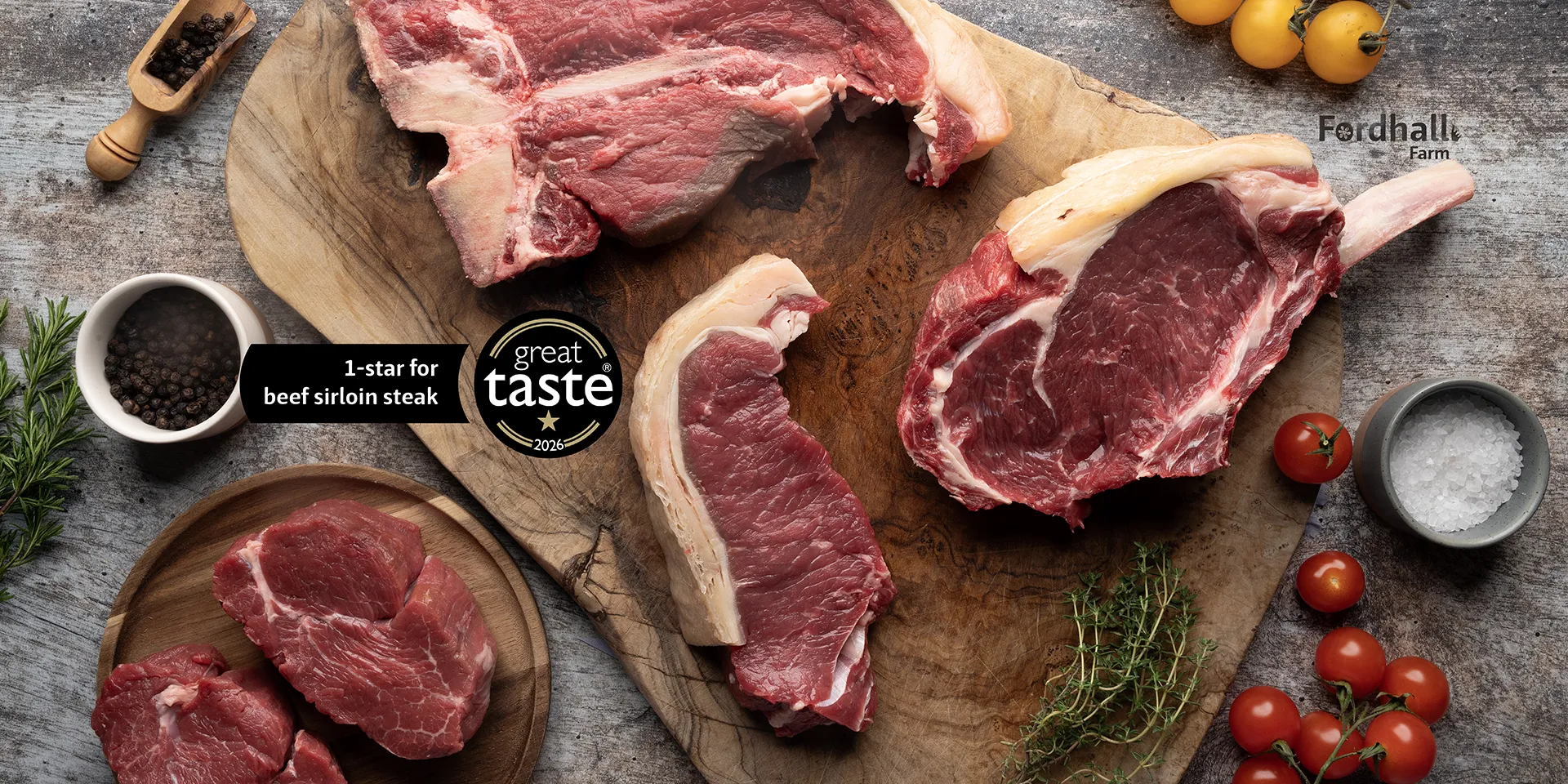
So here is your quick ‘ish’ rundown on what to ask for, where it comes from and how to cook it! I'll walk you through fillet, ribeye, sirloin, rump and flank steaks.
Fillet/Tenderloin
We’ll start at the top, the prize cut. The fillet is the muscle located under the spine. It receives almost no exercise or movement, and therefore has almost no fat. This makes it super tender and very soft to taste. The lack of fat makes the steak easier to cook as it needs less time to reach a required temperature, however, it can quickly and easily be overcooked. I’d suggest a long rest time before and after cooking to let the steak relax and taste extra tender.
Ribeye
Taken from the forequarter of beef, the ribeye is seen as the thin divide in the cow between slower and quicker roasting steaks and joints. The ribeye contains the fat it shares from the forequarter cuts of beef and the tenderness of the hind quarter. Ribeye is rapidly grow in popularity as people start to appreciate the fat within the steak. If you are after super marbled wagu ribeye’s, then we’re not the butchers for you, but if you can appreciate a tender tasty steak slowly raised on naturally occurring pasture then stick around! I’d suggest a super-hot pan, render the fat within by giving the outside of the steak a crispy crust, only flipping your steak once!
Sirloin
Located further down the animal towards the hip and loin, the sirloin has moderate marbling and a distinct, thick chunk of fat running along the outside of the steak. An all-rounder steak in my book; fat, flavour and if cooked correctly then a super tasty steak. For cooking the steak, I’d suggest introducing the steak to the pan by searing the fat until it's golden crispy. This not only gives you a crispy buttery fat layer but also introduces lots of lovely rendered fat and juices into the pan early on to only enhances the flavour of the meat. Rest the steak well and slice against the grain of the meat for a tasty and tender steak!
Rump
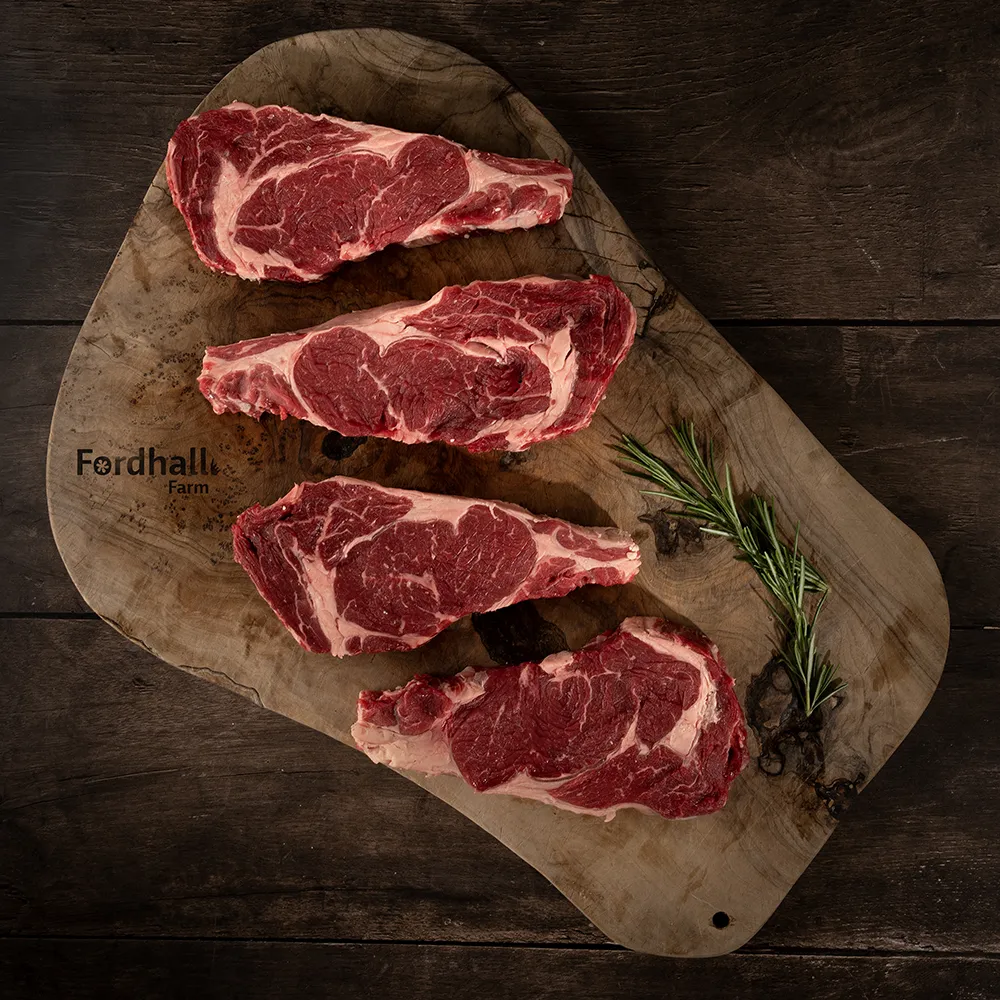
The classic British steak comes from the rear of the cow, distinct by its layer of fat and large amount of lean meat underneath. Although it tends to get a poorer reputation as it’s the cheapest cut, it’s often the most flavoursome. The texture of the rump is a little more fibrous than the others as it's a well worked muscle, but if butchered and cooked correctly can give just as good as a steak as any other. Don’t overcook this one! Rump can be easily overcooked and can quickly dry out due to the lack of marbling. If you're worried of doing so, leave a slice of butter on the steak whilst it's resting (you’ll thank me later!).
Flank/Skirt
Something a little different for the adventures few. The flank (or skirt) steaks are taken from the abdominal wall of the cow. Theses muscles are used for keeping organs in line within the chest of the animal and so have little to no fat. They have long muscle fibres and carry a rich deep beefy flavour and can be a little more tricky to cook as they’re different in shape, size and thickness. I’d suggest cooking quickly over a hot heat and to a medium level, rest and cut your steak against the grain. This basically means cutting the steak once cooked in the opposite direction to most of the meat fibres. This shortens the tougher muscle fibres and means what may have be a slightly tougher steak isn’t the case anymore!
Overall, your preferred cut of steak is often a personal preference and can change for an individual depending what flavours you’re looking for with that meal! Whichever you choose, I’m sure you’ll enjoy!
I hope I've been able to share something new with you today!
James